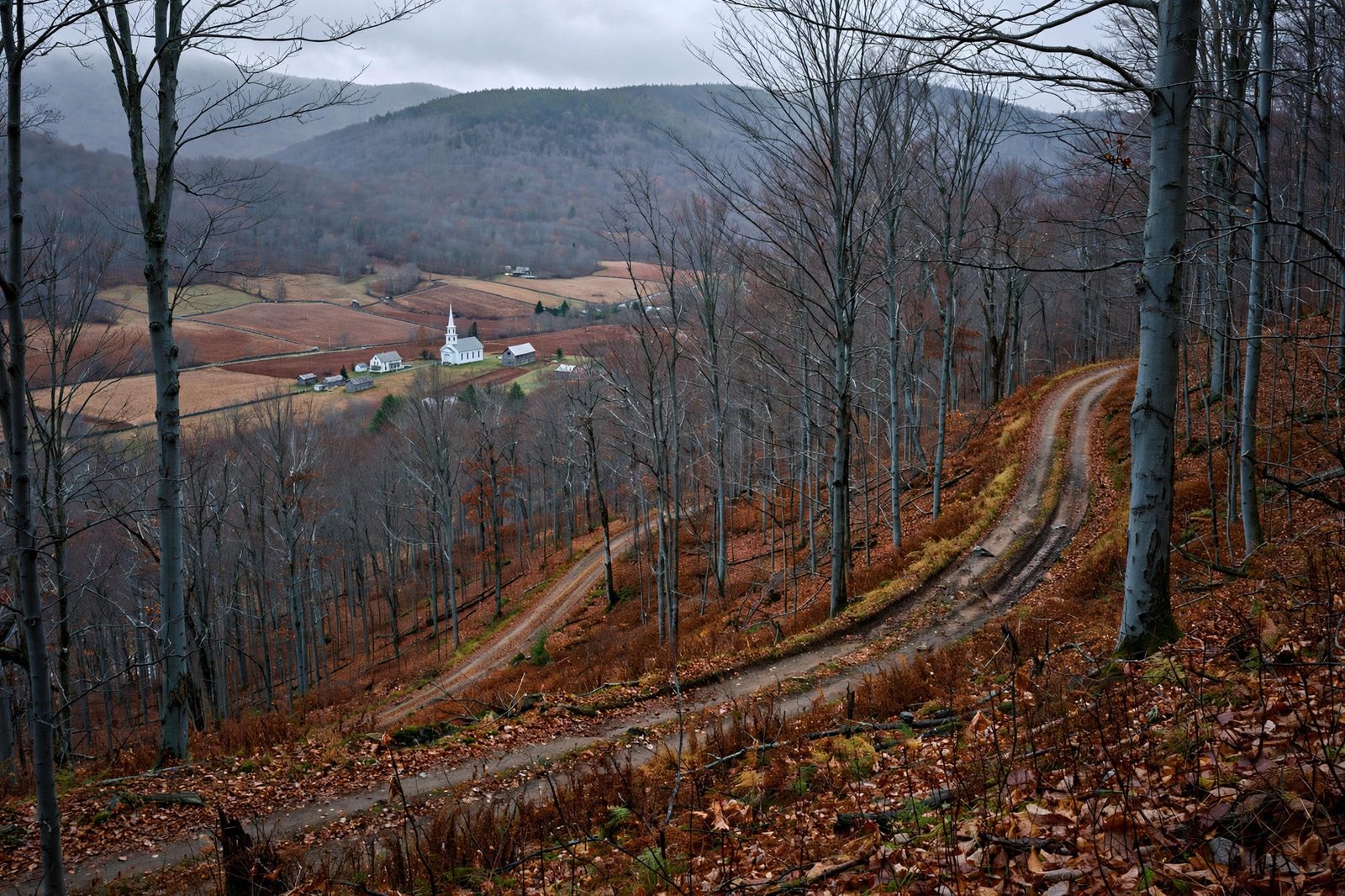
The color show is over. A week of wind and rain knocks the last leaves off the maples, and almost overnight Vermont's hillsides turn the color of wet bark. The tourists have gone home, the ski lifts aren't spinning yet, and the state settles into its quietest stretch of the year: stick season.
Stick season is the in-between time — after the foliage ends and before the first snow that actually stays. It runs roughly from late October through November, arriving earlier and lasting longer up in the mountains. At Killington, the resort describes it as the window after the leaves drop and before the snow arrives, about late October through mid-November, with the trails still open and a stark beauty of their own.
Where the name comes from
Look at a Vermont hillside in November and the name explains itself. With the leaves down, a hardwood forest is nothing but trunks and branches — a whole mountainside of sticks against a gray sky.
Nobody can point to one person who coined it, and that's typical of real Vermont vernacular: it was simply the phrase people used. It was already established local vocabulary when SKI Magazine used it in a 2015 profile of Stowe, pairing the state's two shoulder seasons in one line: mud season in the late spring, stick season in the late fall. Stowe's own tourism association was promoting stick-season trips by 2021.
It took a Vermonter to carry the phrase around the world. Noah Kahan, who grew up in Strafford, named his 2022 album Stick Season, and the title song went everywhere. Kahan has said he picked the term up from the older folks in his hometown, who used it for the gray stretch when "it's just kind of gray and cold, and there's no snow yet" — and the beauty of the foliage is done.
Seven Days has called stick season Vermont's fifth calendar subdivision, with mud season as the sixth — though plenty of Vermonters give mud season the fifth-season title instead. The counting has never been official. Vermonters have been joking about extra seasons for generations; stick season is just the one that arrives quietly, after the famous one and before the long one.
What it's actually like out there
The woods open up. With the leaves down you can suddenly see the shape of the land — stone walls running through the trees, old cellar holes, ledges and views that vanish completely by June. Trails that feel enclosed all summer turn into ridge walks with sightlines. Hikers get the mountains to themselves, and the frost heaves its first patterns into the fields on cold mornings.
It's also deer season. Vermont's regular rifle season runs November 14-29 this year, with muzzleloader seasons on either side of it, so blaze orange is standard dress anywhere near the woods. More than a few Vermonters plan their whole fall around these weeks; for them, stick season isn't the off-season at all — it's the main event.
In town, the change is just as plain. November is the easiest time of year to get a table at the restaurant that was booked solid three weeks ago, the line at the coffee counter is locals again, and inns quietly drop their rates between the foliage and ski crowds. The woodstove goes from occasional to full-time. Everybody is stacking, splitting, or ordering one more cord.
The case for the gray weeks
Not everyone dreads it. Stowe photographer Paul Rogers has been running a photo project devoted to this season since about 2008, deliberately pointing his camera at November while everyone else waits for snow or mourns the leaves. His reasoning, in essence: the landscape is unadorned — beautiful without the makeup.
That's about right. Stick season is Vermont with the decoration taken down: working farms, bare ridges, empty roads, early dark, and the first real cold. It doesn't photograph like October and it doesn't promise anything. But it slows the whole state down for a few weeks, and plenty of people who live here will tell you, off the record, that it's their favorite time of year.
Then one morning the first snow stays on the ground instead of melting by noon, the ski areas fire up in earnest, and stick season is over — until the leaves come down again next fall.